Servidot helps customers find someone for a standard service or commission work that needs a custom proposal. We built its mobile application, public catalogue, provider tools and backend around both routes. Once the customer and provider agree, the product carries the job through scheduling, funding, completion and support, keeping the conversation and payment attached to the work.
What we built
Choose a service and an available appointment
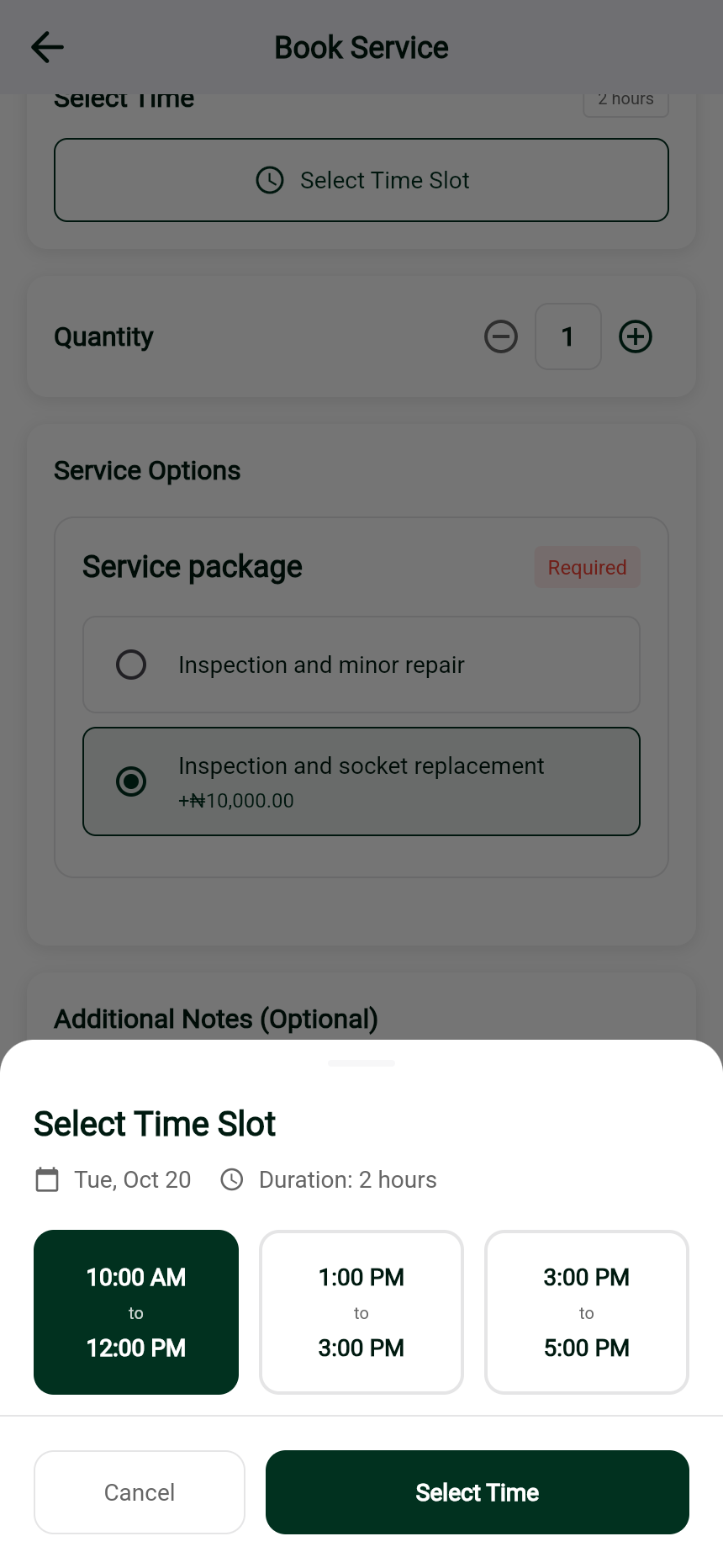
Customers can find eligible providers in their location, select packages or extras, choose quantities and receive a quote. We calculated appointment options from service duration, working hours and blocked dates. The customer’s choices therefore lead to a booking time the provider can offer, rather than an enquiry detached from the provider’s calendar.
Turn a custom brief into a booked job
For work outside a standard package, customers can describe the job, budget and timing and attach useful material. Providers respond with proposals. We built acceptance to create the linked booking and close competing pending bids together, carrying the agreed work into the same job-management process as a standard service.
Guide providers through setup and review
Providers need business details, services, availability, documents and payout information before requesting activation. We built a checklist based on what they have actually saved, with review kept as a separate step. Providers can see what is missing, and staff receive an activation request with the information needed to assess it.
Keep questions and support attached to the job
Private conversations include messages, attachments and read status. Customers can raise a support report with the relevant booking details already attached. We also tied reviews to completed jobs. Communication, problem resolution and feedback can follow the same piece of work instead of becoming disconnected messages that someone must reconstruct.
The workflow
Inside the app
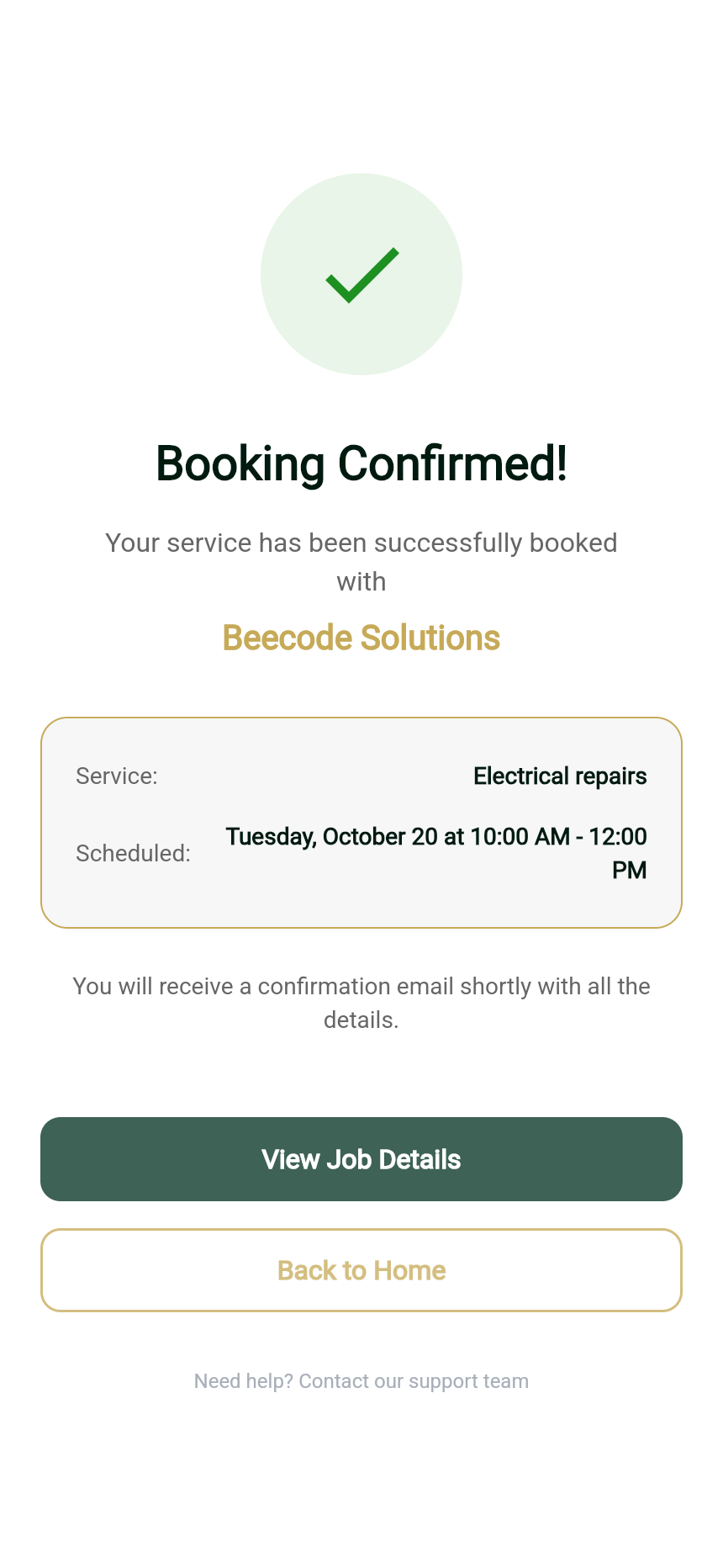
From choosing a service to confirming a booking.
01Choose a service
02Set the appointment
03Booking confirmed
Original Flutter app screens, captured locally with demo booking details. No live booking or payment was made.
Carry an agreement through to completion
We designed the marketplace around the whole job. Agreeing a price, reserving time, allocating funds and confirming completion are separate decisions, each with a place in the booking’s history.
Agree the work and appointment
The backend checks the quote, selected options and available slot before creating the booking. Rescheduling checks the calendar again, so a changed appointment still reflects the service duration and the provider’s other commitments.
Allocate funds to the booking
The system moves wallet funds into the booking’s holding record while the job progresses. Accepted custom proposals have a separate funding step linked to the agreed project and booking, keeping the agreement and its payment together.
Confirm completion or resolve a problem
Customer confirmation comes before settlement to the provider and platform. Cancellation and decline paths handle refunds. Support records and completed-job reviews stay connected to the booking, preserving the context needed to deal with a question after the work ends.
The engineering
Save what the customer and provider agreed
We calculated quotes from saved catalogue prices and option rules, then checked them again at booking. The booking stores the service, options and pricing as agreed. A provider editing their listing later should not make the original agreement unclear; the job retains its own commercial record.
Recover a booking after an interrupted connection
A dropped connection does not always mean a booking failed. We made the mobile app retain an uncertain attempt and gave backend requests identifiers and saved results. A retry can then resolve the original action. Database transactions also join proposal acceptance and booking creation, addressing repeated taps and competing decisions.
Control access without disconnecting the experience
We shared catalogue eligibility rules between discovery and checkout, while keeping private files tied to their conversation or project. Staff actions check current permissions and location. Payment confirmation and wallet bookkeeping have separate reconciliation work, so delayed external responses can be followed up without treating the screen as the final authority.