Find a stay or experience. Manage the reservation.
Users
Travellers, hosts and operators
Our work
Travel platform development
Scope
Mobile · Web · Backend
Status
Historical work · Website not live
The project
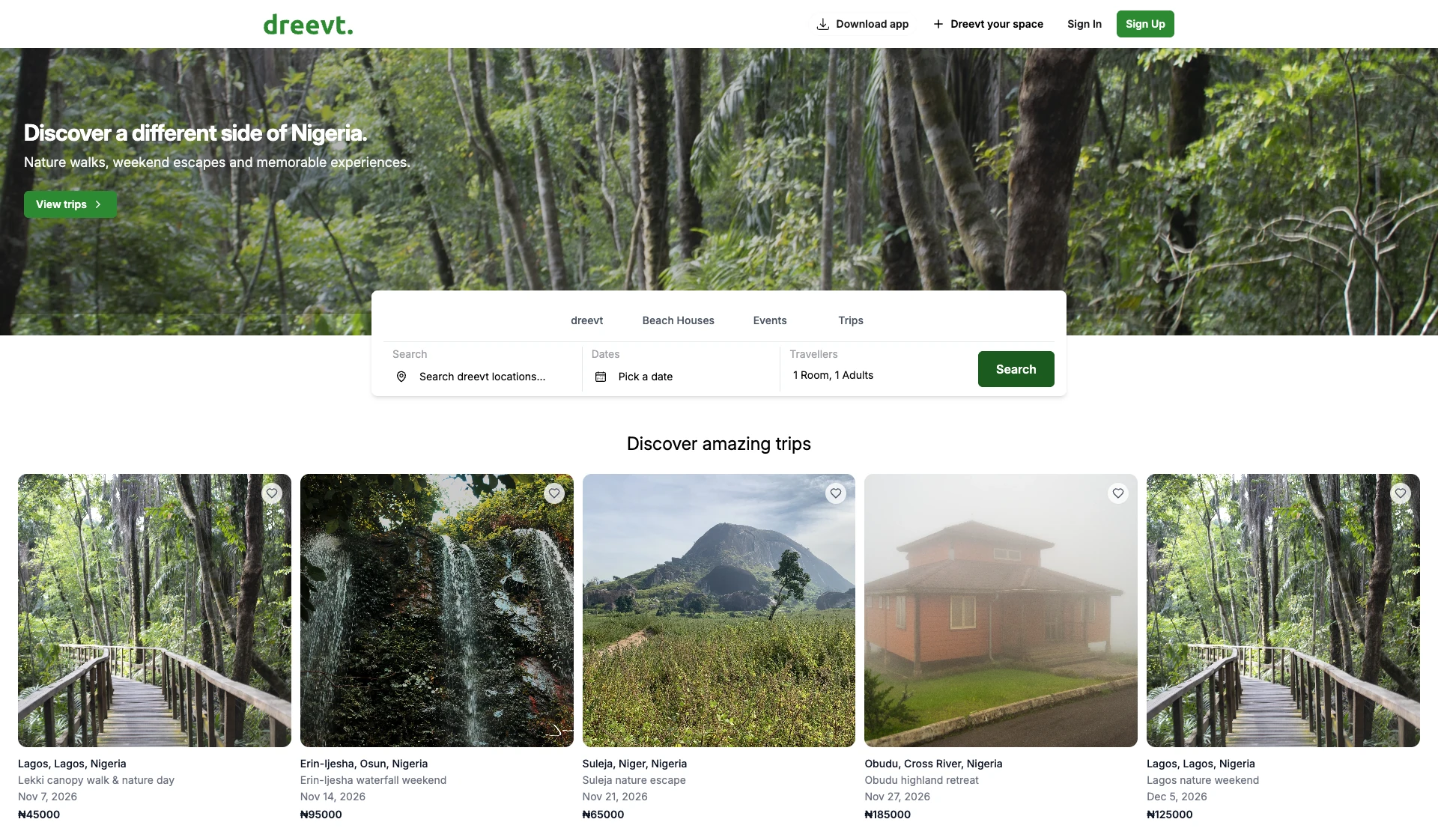
We built Dreevt so travellers could discover stays, trips and events, then carry their dates and guest choices into a reservation. We also built the host workspace for creating listings and managing bookings. The web, mobile and backend systems connect that customer journey to the pricing, calendar and payment records behind it. This is historical work; the website is not currently live.
What we built
Find a stay or experience that fits
Travellers can narrow listings by location, price, guest capacity and amenities, then open a listing with their selected dates. We designed different details and selection flows for stays, room offers and experiences. A night’s accommodation and a ticketed trip need different information, even when they share a familiar browsing experience.
Build a complete listing in manageable steps
Hosts enter property details, pricing, policies, location, photos and arrival information through a staged form. We saved progress separately from completion and publication. Hosts can return to unfinished work, while the system distinguishes a draft from a listing that has been completed and marked for publication.
Manage reservations beyond checkout
Booking connects dates, travellers and customer information to a price calculated by the server. We built payment confirmation, booking payment status and payout or refund requests around that reservation. Hosts can also record bookings that began outside the marketplace, bringing a direct enquiry into the same booking workspace.
Keep conversations and browsing useful
Travellers and hosts can discuss a listing through conversations with message history and unread status. Review submission checks reservation history and repeat feedback. We also built mobile caching that reuses listing data and previously saved search results, helping people revisit options when a later browsing request fails.
The workflow
Turn travel choices into a reservation
We designed pricing, availability and payment as connected parts of a booking, each with its own checks. That makes it possible to follow what was selected, what it costs and what happened after payment.
Calculate from the selected listing
The booking request includes dates, guest details and the listing. The server reloads the stored listing information and calculates the reservation amount, fees and tax breakdown, keeping the saved price grounded in the product’s own records.
Check and update calendar records
Calendar records track blocked dates, capacity and booked units. Creating a reservation checks those records. Payment confirmation is followed by calendar allocation, while relevant cancellations release allocations. The calendar therefore records more than the dates displayed in a picker.
Follow payment, release and refund requests
Payment handlers attach confirmed references to the reservation and record the relevant amounts. Release and refund requests check the booking and its payment status, giving host operations and customer support a common record to investigate.
The engineering
Connect the traveller’s booking to the host’s record
We built separate customer, host and administrative interfaces around shared booking, calendar, payment and messaging services. Each interface exposes the tasks its users need, while the underlying records connect the traveller’s reservation to the host’s operational view of the same booking.
Calculate the saved price on the server
The interface collects choices and displays the breakdown; backend booking logic calculates from stored listing data. We distinguished night-based stays from other inventory in that calculation. This keeps the amount recorded on a reservation separate from a total displayed or submitted by a client device.
Reuse browsing data across mobile screens
We put caching in the mobile data layer so different screens can reuse it. Matching searches share requests, successful results are saved and listing details can be reused. Previously saved results provide a browsing fallback after a failed request; booking and payment still require a connection.